

Speaking at an event hosted by the Gender Mobile initiative on the need to build systems and structures around protecting students in higher institutions from sexual and gender-based violence, technology facilitated gender based violence.
Speaking at an event hosted by the Gender Mobile initiative on the need to build systems and structures around protecting students in higher institutions from sexual and gender-based violence, technology facilitated gender based violence. SGBV and TFGBV have a significant impact on how women navigate spaces, whether online or offline. It is important to ensure that these spaces are safe enough for women to fully enjoy their fundamental rights to privacy, expression, association, assembly, and related rights. Tsema remains committed to ensuring the protection and promotion of human rights across diverse spheres
Read More
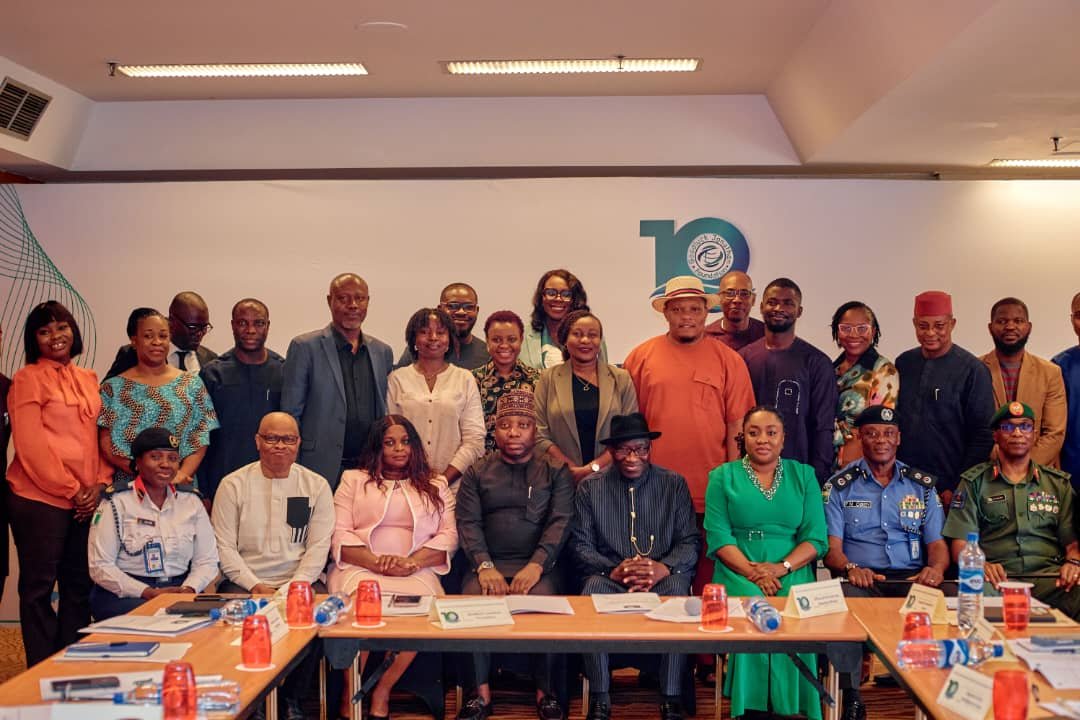
High Level Conference hosted by the Heinrich Böll Foundation on the Glass Ceiling Project with Tsema Yvonne Ede as the Consultant
The idea of the project is to interrogate the perception that women do not support women in Nigeria. Our research focused on women working in politics, media, civil society, and academia. The research revealed interesting reflections of women on subjects like internalised biases. hypercriticality and the perfection standards, access to funding, and generational perceptions. It is important to note that Nigeria, Africa’s largest economy and most populous nation, has made significant strides in various sectors. However, gender inequality remains in leadership, and political participation remains a continuing setback. Despite a rich history of powerful female figures, women are grossly underrepresented in both public and private sector leadership roles. This underrepresentation is often attributed to systemic barriers such as patriarchal norms, political and financial hurdles, and deep-seated societal biases. While these external factors are widely acknowledged, the subtle, psychological, and internal dynamics among women themselves, which can either accelerate or hinder progress, are often overlooked. Despite extensive research on the underrepresentation of Nigerian women in leadership due to structural and cultural barriers, a less-examined aspect is the role women themselves play in this dynamic. This project, titled ‘The Role of Women in Women’s Leadership Advancement in Nigeria: Realities and Reflections’, seeks to critically analyse the notion that women’s own actions or inactions may inhibit their progress and the progress of their peers. Findings from recent projects supported by HBS, Nigeria, in Abia and Oyo States have brought this issue into focus. The studies revealed that some women who attain leadership positions have become gatekeepers, failed to mentor others, or engaged in internal conflicts that weaken the collective female voice. Inadvertently, reinforces patriarchal norms. This situation, often stemming from long-term marginalisation and the ‘one seat at the table’ precept, can manifest as either timidity or hostility towards fellow women. This project seeks to challenge these perceptions and to build a more collaborative path forward.The conference provided an opportunity for stakeholders to discuss the ‘Realities, provide a platform for ‘Reflections’, and propose Solutions-it also allowed participants to investigate how stereotypes and hidden biases contribute to the glass ceiling hindering women’s upward mobility.•The conference presented the perceptions and experiences of both emerging and established female leaders. Participants fostered mentorship matches, built comradeship, and possible networks. Participants developed locally relevant and culturally appropriate strategies to address the identified barriers.
Read More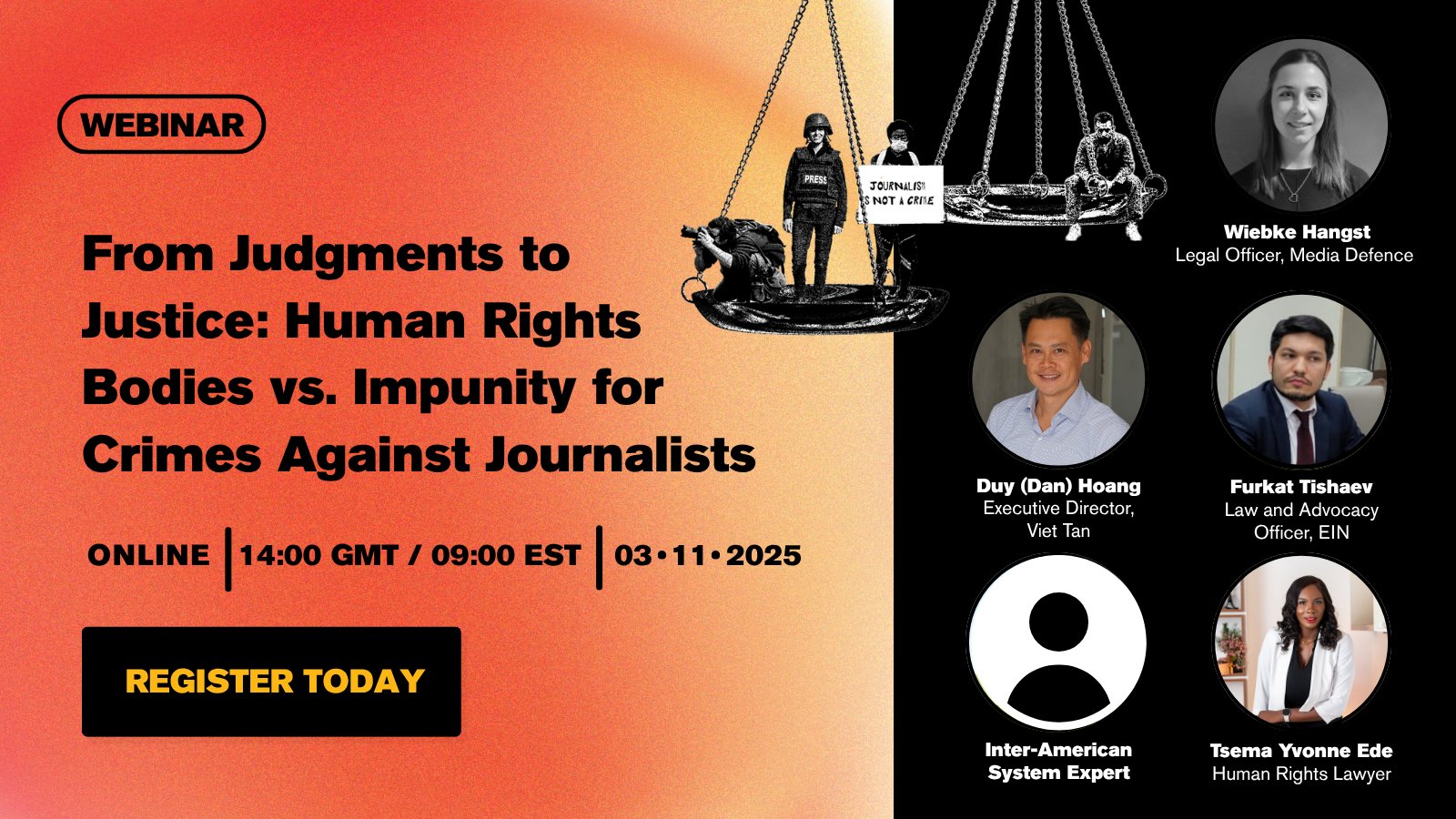
From Judgments to Justice: Human Rights Bodies vs. Impunity for Crimes Against Journalists
⚖️ Webinar: From Judgments to Justice for Journalists In a powerful online webinar, “From Judgments to Justice: Human Rights Bodies vs. Impunity for Crimes Against Journalists,” Tsema contributed to a global dialogue on combating impunity. Alongside a distinguished international panel, she explored how rulings from human rights bodies can be transformed into concrete accountability, ensuring justice for journalists targeted for their work.
Read More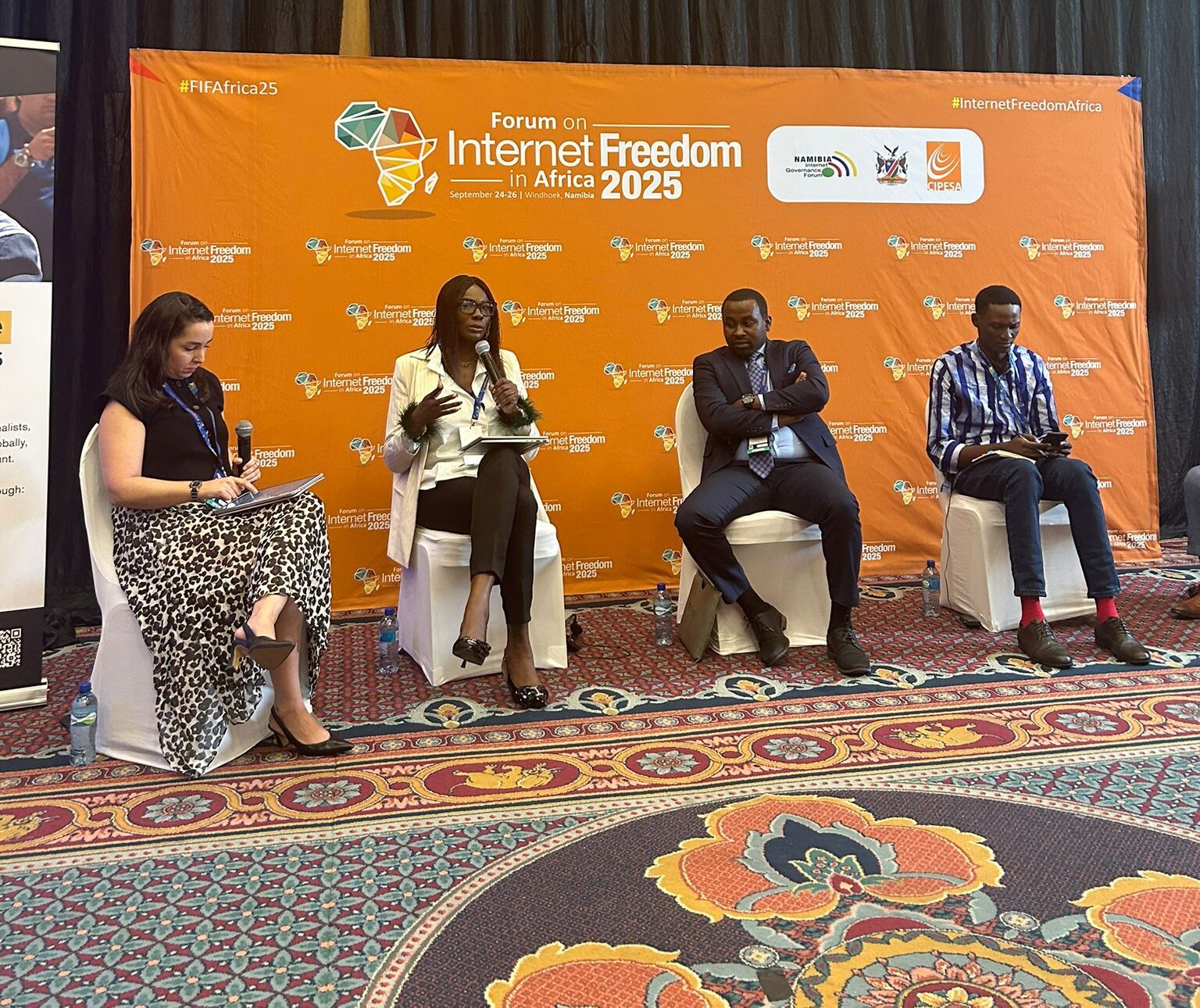
Surveillance Tech and the State: Legal Resistance to Digital Authoritarianism in Africa
Panel Discussion: Resisting Digital Authoritarianism in Africa Tsema joined fellow experts at the Internet Freedom Forum Africa 2025 in Windhoek, Namibia, for a panel titled “Surveillance Tech and the State: Legal Resistance to Digital Authoritarianism in Africa.” The discussion focused on the growing use of surveillance technologies by state actors and the legal frameworks and resistance strategies essential to protecting digital rights and freedom of expression across the continent.
Read More
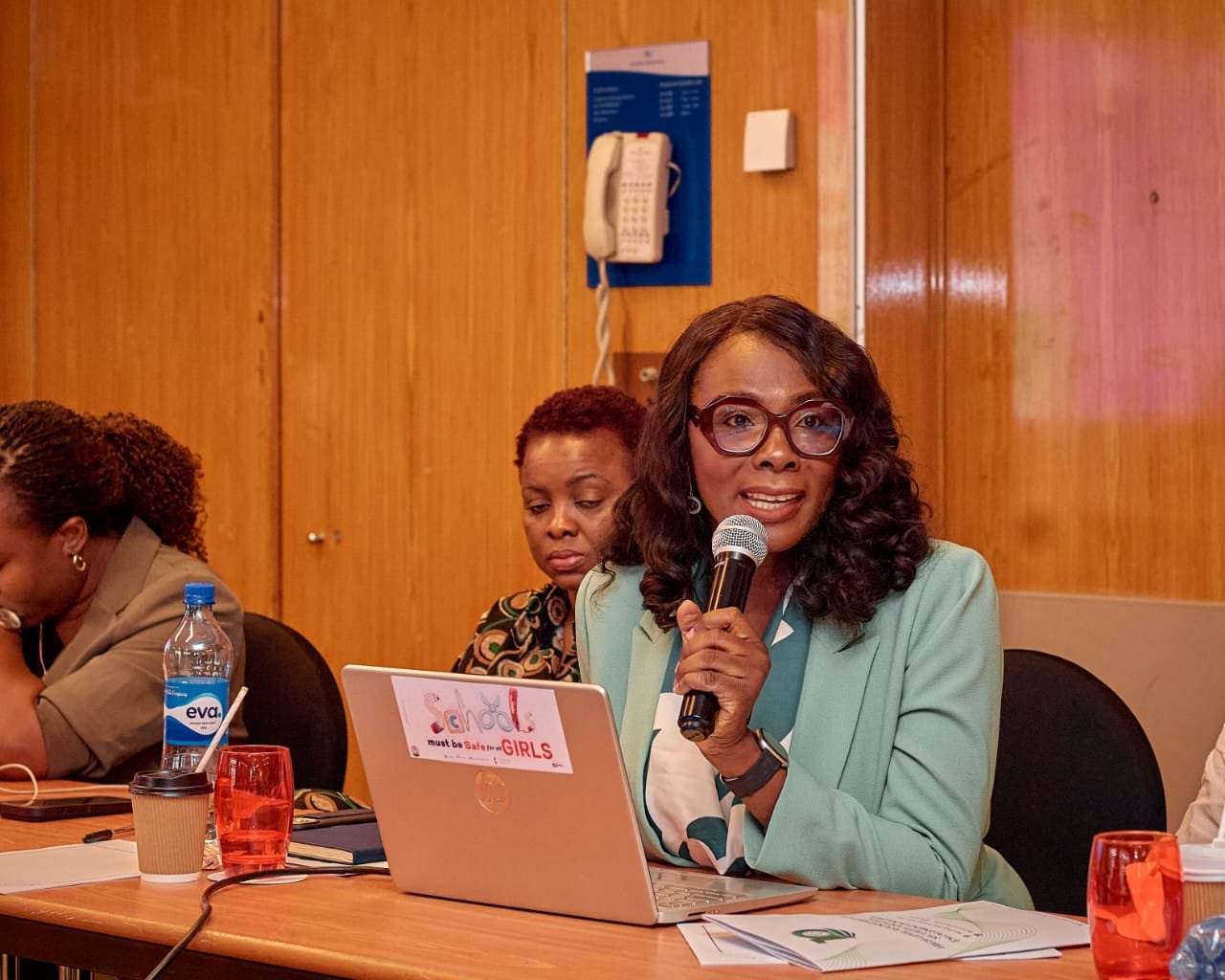
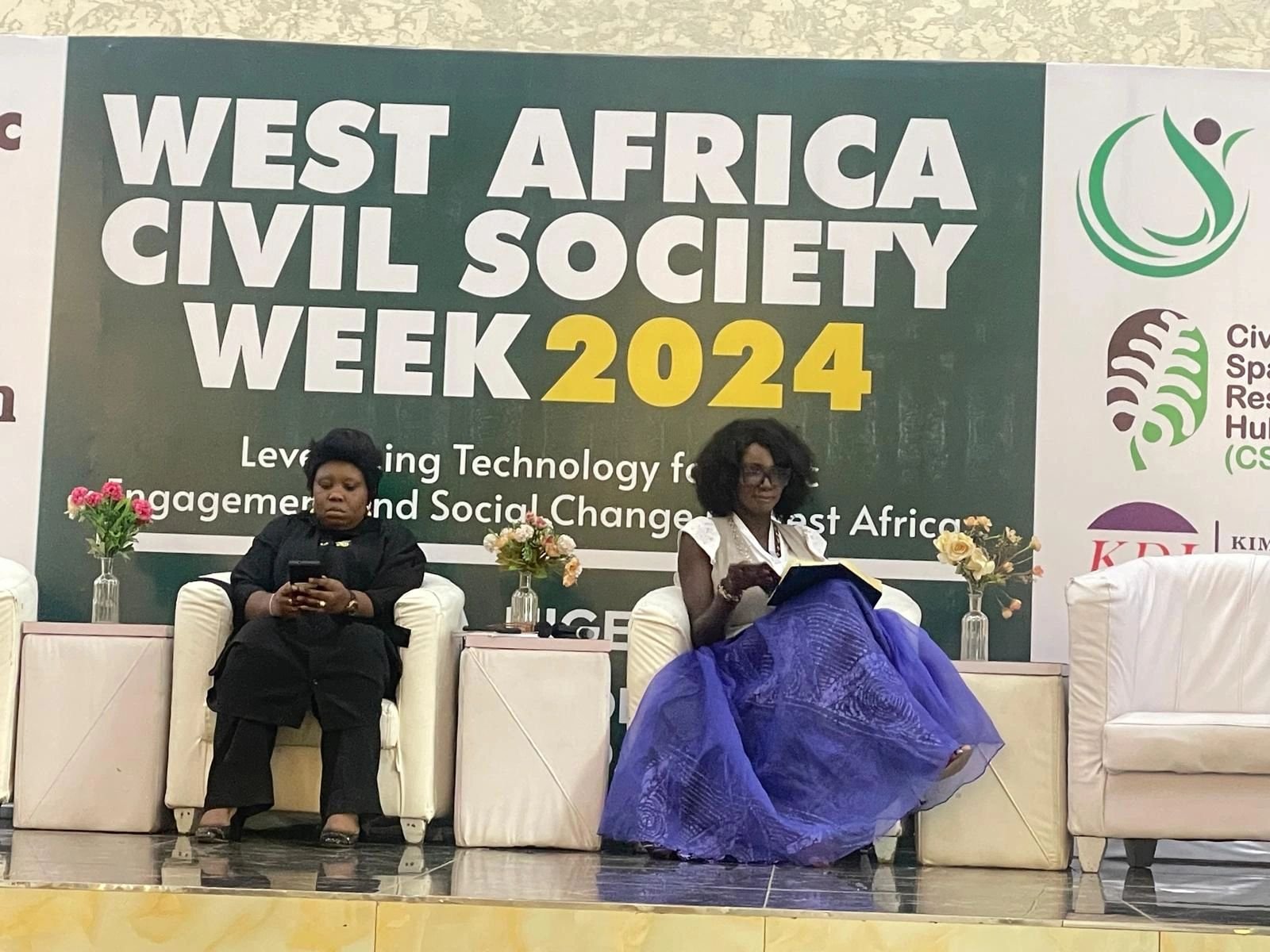
My favourite thing about panel conversations is that I feel like I’m talking with friends.
My favourite thing about panel conversations is that I feel like I’m talking with friends. Interestingly, the intense preparation I put ahead of these panels, you’d think I was preparing for a dissertation defence. Teehee. That said, I enjoyed sitting on Rise Network’s panel on Responsible and Ethical AI for Civic Space Protection. I thoroughly enjoyed the conversation with the other panelists, the moderator also did a great job in directing the conversation towards identifying the governance problems that we believe can be solved with AI while at the same time recommending solutions to the identified problems.
Read More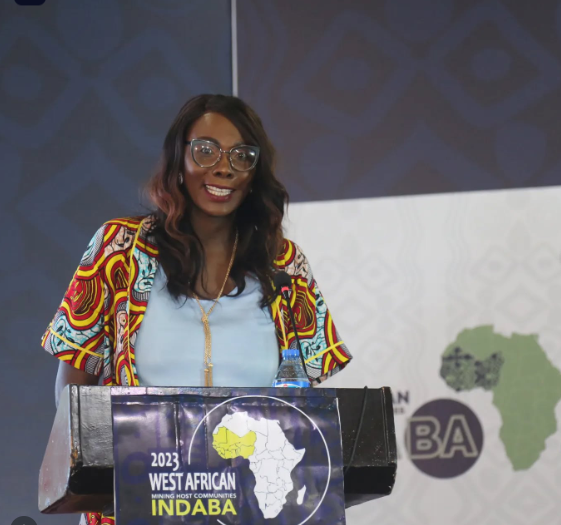
Climate Smart Mining, an Imperative for Host Community Resilience in West Africa
Tsema Ede, Natural Resource Expert and Lead on Human Rights Support Funds speaks on “ Climate Smart Mining, an Imperative for Host Community Resilience in West Africa” Tsema Ede, expert en ressources naturelles et responsable des fonds de soutien aux droits de l’homme, s’exprime sur « L’exploitation minière intelligente face au climat, un impératif pour la résilience des communautés d’accueil en Afrique de l’Ouest » – When we are signing CDAs, even the representatives do not understand the impact and we find ourselves in a conflict situation. « Lorsque nous signons des CDA, même les représentants n’en comprennent pas l’impact et nous nous retrouvons dans une situation de conflit. » – There is a need for strong regulatory frameworks. When a community is exposed to vulnerabilities that come with mining we need to strengthen their capacity to be resilient against these vulnerabilities.
Read More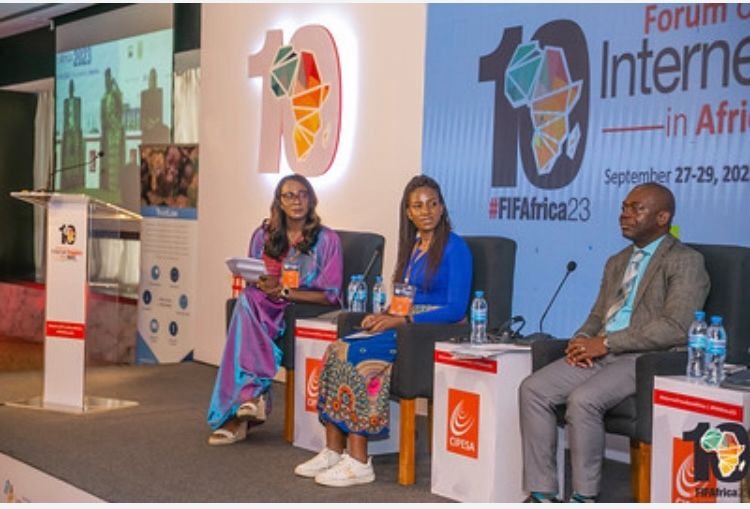
Moderating a Panel on Protecting Journalists and Digital Rights at #FIFAfrica2023
With Kathleen Ndongmo Wiebke Hangst Lynnet Onyango and JB Mayiga, we talked about the work we are doing in securing democratic freedoms via the protection of journalists on the continent. Collaboration on International ICT Policy for East and Southern Africa (CIPESA) hosted the hashtag#FIFAfrica2023 in Dar es Salaam, Tanzania, where I moderated a panel that had these people doing phenomenal work on safeguarding freedom of expression and digital rights. Asante Sana!
Read More